
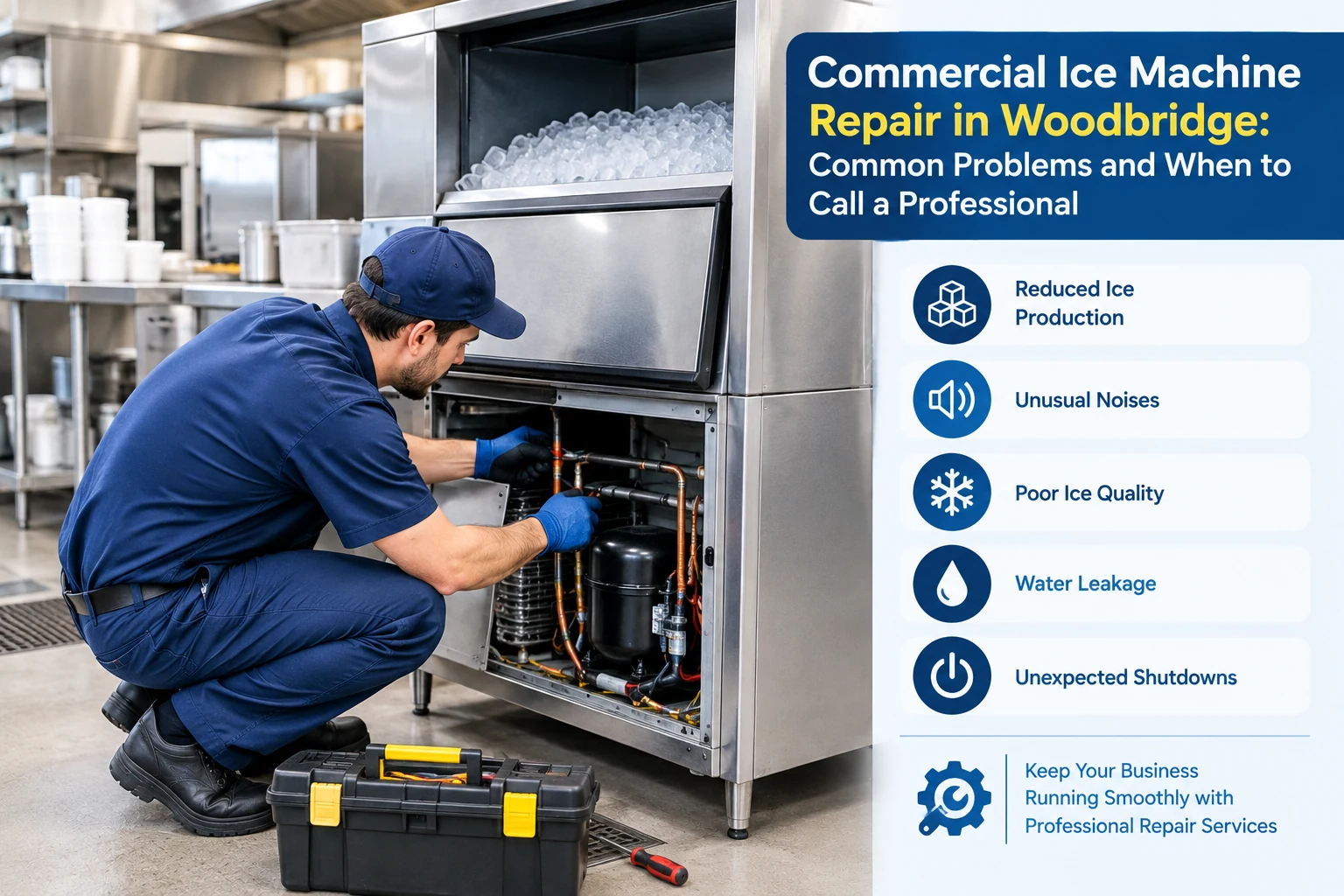
Commercial ice machines are essential for restaurants, hotels, cafes, bars, and other businesses that depend on a consistent supply of ice. From serving cold beverages to supporting food service operations, these machines help businesses maintain smooth daily operations. When an ice machine stops producing ice or begins working inefficiently, it can affect customer service and disrupt normal business activities. Understanding common problems and knowing when to seek professional assistance can help business owners avoid unnecessary downtime and repair expenses.
1. Common Signs Your Commercial Ice Machine Needs Repair
Commercial ice machines operate regularly, and continuous use can eventually lead to worn components, reduced performance, or unexpected breakdowns. Recognizing early warning signs allows business owners to address problems before they become more serious.
Some common signs include:
- Reduced ice production: The machine produces less ice than usual or takes longer to complete a production cycle.
- Unusual noises: Grinding, buzzing, or clicking sounds may indicate a mechanical or electrical issue.
- Poor ice quality: Ice may appear cloudy, unusually small, or irregularly shaped.
- Water leakage: Water around the machine may indicate a blocked drain, loose connection, or another plumbing problem.
- Unexpected shutdowns: The unit repeatedly stops operating or displays warning indicators.
If you notice these symptoms, arrange an inspection to identify the cause. Continuing to operate a malfunctioning machine may worsen certain problems and create additional disruption.
2. Why Is Your Commercial Ice Machine Not Making Enough Ice?
Low ice production is a common concern for businesses that rely on commercial ice-making equipment. Several factors can affect the machine’s ability to produce ice efficiently, including water supply problems, restricted airflow, mineral buildup, and component failures.
Before requesting a repair, check the manufacturer’s operating instructions and inspect any areas intended for routine user maintenance.
Possible causes include:
- Restricted water supply: A closed valve, kinked hose, or blocked water filter may limit the amount of water entering the machine.
- Dirty air filters: Dust and debris can restrict airflow and affect cooling performance.
- High surrounding temperatures: Poor ventilation or excessive ambient heat may reduce production.
- Mineral deposits: Hard water can contribute to scale buildup inside water-contact components.
- Faulty sensors: Malfunctioning sensors may interfere with normal production cycles.
If basic checks do not resolve the problem, a professional technician can inspect the machine’s water system, refrigeration components, and controls.
3. The Importance of Professional Ice Machine Cleaning
Regular cleaning is essential for maintaining ice quality and supporting reliable equipment performance. Over time, mineral deposits, residue, and other contaminants may accumulate in different parts of an ice machine.
Businesses should follow the manufacturer’s recommended cleaning and sanitizing schedule. The frequency may vary according to usage, water quality, operating conditions, and applicable food-safety requirements.
Routine maintenance may include:
- Cleaning and sanitizing approved food-contact surfaces.
- Inspecting and cleaning accessible air filters.
- Checking water filters and replacing them when required.
- Removing mineral scale using approved products and procedures.
- Inspecting drainage areas for blockages.
- Checking for leaks and visible signs of wear.
Cleaning and sanitizing are not interchangeable processes. Both should be performed according to manufacturer instructions and relevant health requirements.
For complicated cleaning procedures or persistent performance issues, professional service can help ensure that the equipment receives appropriate attention.
4. How Water Quality Affects Ice Machine Performance
Water quality can significantly influence the performance and maintenance needs of commercial ice machines. Water containing high levels of dissolved minerals may contribute to scale formation inside the equipment.
Scale buildup can restrict water flow, interfere with certain components, and increase maintenance requirements. It may also affect the appearance of the ice.
Business owners can help manage water-related issues by:
- Following the recommended water-filter replacement schedule.
- Checking whether the machine requires a particular water-filtration system.
- Monitoring changes in ice appearance and production.
- Arranging periodic inspections when mineral buildup is a recurring problem.
- Using only approved cleaning and descaling products.
Installing an appropriate filtration system may help reduce certain water-related maintenance issues, although the correct solution depends on the machine specifications and local water conditions.
5. Why Timely Repairs Matter for Businesses
A malfunctioning ice machine can create practical challenges for businesses that serve beverages or handle chilled products. Restaurants may struggle during busy meal periods, while hotels and bars may have difficulty meeting customer expectations.
Delaying repairs can also allow some equipment problems to become more complicated.
Timely service can help businesses:
- Restore normal ice production.
- Reduce interruptions during busy operating hours.
- Identify problems before further damage occurs.
- Maintain more consistent equipment performance.
- Plan repair expenses more effectively.
If ice production suddenly stops, check the unit’s operating status and any user-accessible indicators. Avoid removing covers or handling internal electrical or refrigeration components without appropriate training.
If the machine produces ice that may be contaminated, stop using that ice and follow applicable food-safety procedures until the issue has been resolved.
6. What to Look for in a Commercial Ice Machine Repair Company
Choosing a suitable repair provider is important for businesses that depend on reliable ice production. Commercial equipment can have specialized refrigeration systems, water controls, sensors, and electrical components that require relevant technical expertise.
When searching for commercial ice machine repair Woodbridge, compare service providers based on their experience, communication, pricing, and ability to work with your equipment.
Consider these factors before booking:
- Commercial equipment experience: Ask whether technicians regularly service commercial ice machines.
- Brand familiarity: Confirm that the provider works with your machine’s manufacturer and model.
- Transparent estimates: Request details about diagnostic fees, labor, and replacement parts.
- Scheduling options: Ask about appointment availability and emergency service, if needed.
- Warranty information: Confirm whether completed repairs and replacement parts include written warranty terms.
It is also helpful to read customer reviews and explain the symptoms before scheduling a visit. Sharing the model number, error codes, and recent changes in performance may help the technician prepare for the inspection.
7. Preventive Maintenance Tips for Commercial Ice Machines
Preventive maintenance can help businesses identify developing issues and manage equipment more effectively. Although maintenance cannot prevent every breakdown, it may reduce avoidable problems and support consistent operation.
A practical maintenance routine should follow the manufacturer’s instructions and include appropriate professional inspections.
Business owners should consider:
- Keeping the area around the machine clean and adequately ventilated.
- Checking accessible filters according to the recommended schedule.
- Monitoring ice production and changes in ice quality.
- Inspecting visible water connections for leaks.
- Arranging regular cleaning and sanitizing.
- Recording service visits and recurring problems.
Staff should also know how to recognize warning signs and report issues promptly. Consistent monitoring makes it easier to identify unusual changes before they significantly affect daily operations.
Conclusion
Commercial ice machines play an important role in the daily operations of restaurants, hotels, cafes, and other businesses. Reduced ice production, unusual noises, water leaks, and poor ice quality can indicate problems that require attention. Regular cleaning, appropriate filtration, and preventive maintenance can support reliable performance, while timely professional repairs may help reduce operational disruptions. When arranging commercial ice machine repair Woodbridge, choose a qualified provider who understands your equipment, explains repair options clearly, and offers transparent estimates. Taking a proactive approach to equipment care can help protect your investment and keep your business operating smoothly.