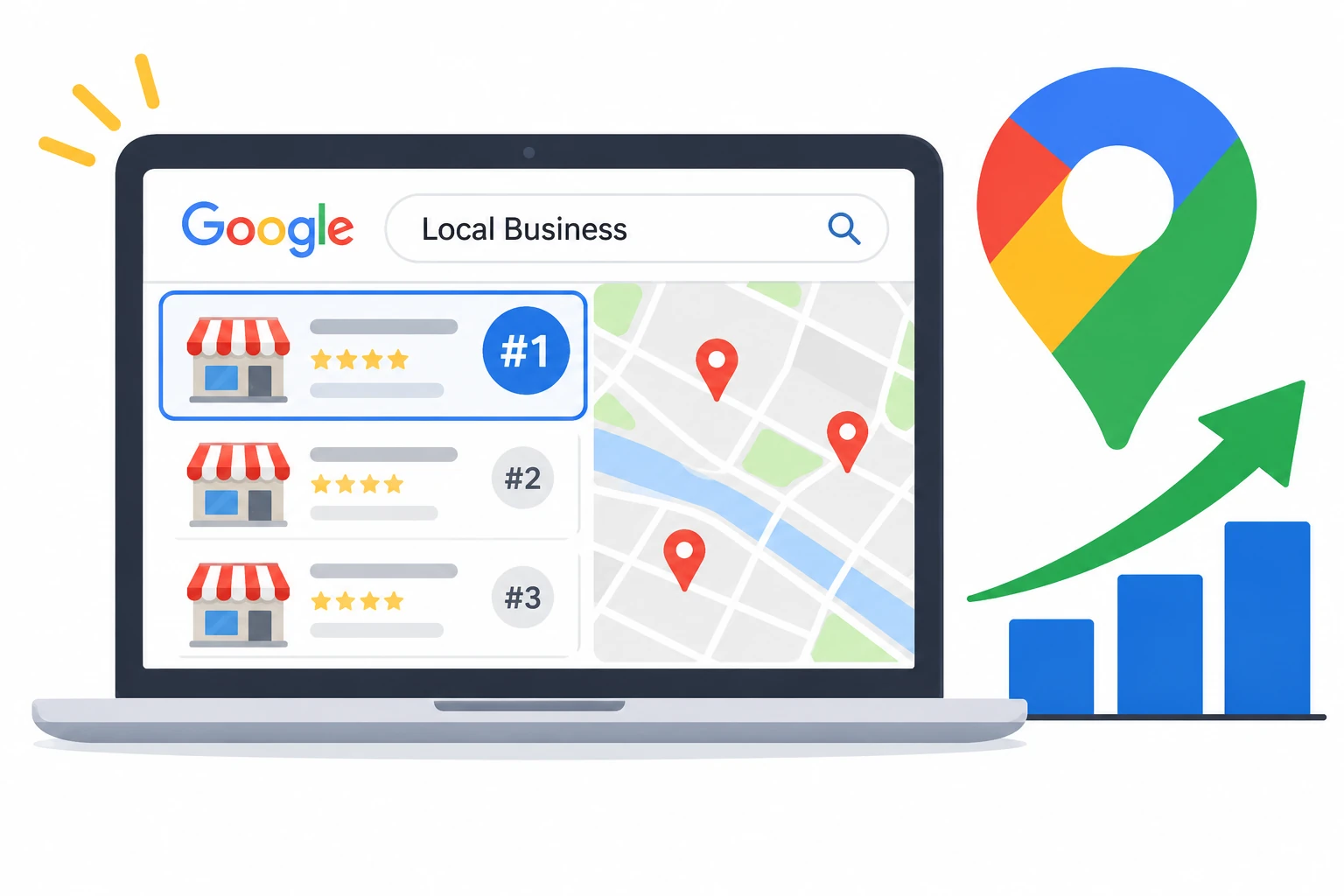
When people search for nearby restaurants, repair services, clinics, or shops, Google Maps helps them discover relevant businesses. However, some businesses appear at the top of search results, while others struggle to attract attention. Understanding Google Business Profile Optimization is important for business owners who want to improve their online visibility and reach more potential customers.
But how does Google Maps decide which businesses rank first? Google considers several factors to identify businesses that best match a customer’s search and location. Understanding these factors can help businesses develop an effective local SEO strategy.
1. Relevance: Matching Business Information with Searches
Relevance refers to how closely a business matches what someone is searching for. For example, when a person searches for a nearby dental clinic, Google tries to display businesses that provide dental services.
Businesses can improve relevance by:
- Selecting the correct primary business category.
- Adding suitable secondary categories.
- Providing accurate service descriptions.
- Listing relevant products and services.
- Keeping profile information updated.
A properly organized business profile helps Google understand what a company offers and connect it with relevant searches.
2. Distance: How Close Is Your Business?
Distance is another important factor in Google Maps rankings. Google considers how far a business is from the location mentioned in a search or the searcher’s estimated location.
For example, someone searching for a coffee shop nearby will generally see relevant businesses operating in that area.
However, the closest business does not always rank first. Google also evaluates relevance and prominence before displaying local results.
Business owners should provide their genuine business address and accurate service-area information. Incorrect location details can confuse customers and create problems with business listings.
3. Prominence: Building a Strong Online Reputation
Prominence refers to how well-known and established a business is. Google uses information from different online sources to understand a company’s reputation and presence.
Businesses can strengthen their prominence through:
- Earning genuine customer reviews.
- Getting mentioned on relevant websites.
- Building quality local backlinks.
- Maintaining consistent business information.
- Publishing informative industry-related content.
- Developing a positive reputation among customers.
Building prominence takes time. Businesses should focus on credibility and quality rather than depending on artificial ranking techniques.
4. Customer Reviews and Ratings
Customer reviews help people understand the experiences of previous customers. They also influence how potential customers perceive a business.
Positive and genuine feedback can strengthen customer confidence and encourage more people to contact a company.
Businesses should follow these practices:
- Encourage satisfied customers to share honest feedback.
- Respond professionally to customer reviews.
- Address negative feedback politely.
- Resolve customer complaints whenever possible.
- Avoid purchasing fake reviews.
Regularly responding to customer feedback shows that a business values its customers and takes their experiences seriously.
5. Complete Your Google Business Profile
A complete Google Business Profile makes it easier for customers to find important information about a company. It also helps Google understand the business and its offerings.
Make sure your profile includes:
- Correct business name.
- Primary and secondary categories.
- Accurate address and phone number.
- Website URL.
- Updated opening hours.
- Business description.
- Products and services.
- Relevant photographs.
Outdated information can create confusion and affect the customer experience. Reviewing your profile regularly helps ensure that visitors receive accurate details.
6. Upload Genuine Business Photos
Photos give potential customers a better understanding of what a business offers before visiting or contacting it.
For example, restaurants can upload pictures of their food and dining areas, while service providers can share photographs of their teams and completed projects.
Useful images include:
- Business entrance and storefront.
- Office or shop interiors.
- Products and services.
- Employees and team members.
- Completed projects.
- Genuine business activities.
Use clear, original, and relevant photographs that accurately represent your company. Visual content makes your listing more informative and appealing.
7. Website Quality and Local SEO
A business website can support local search visibility by providing additional information about services, location, and experience.
Some important website optimization practices include:
- Creating dedicated pages for different services.
- Using relevant location-based keywords naturally.
- Improving website loading speed.
- Making the website mobile-friendly.
- Adding accurate contact information.
- Publishing helpful blog posts.
- Building links from relevant websites.
Businesses should also maintain effective Google Business Profile Management practices to ensure their listing remains accurate, informative, and useful for potential customers.
8. Maintain Consistent Business Information
Managing a business profile requires regular attention. Contact details, opening hours, services, and other information may change over time.
Businesses should regularly:
- Review their business information.
- Update holiday and special opening hours.
- Check listed services and categories.
- Respond to new customer reviews.
- Upload recent business photographs.
- Verify website and contact details.
Consistent profile management helps customers access reliable information and creates a better online experience.
9. Does Paying Google Guarantee the First Position?
Some business owners believe that paying Google or adding more keywords to their business profile can guarantee the first position on Google Maps. However, organic local rankings do not work this way.
Google Ads provides paid advertising opportunities, but advertisements are different from organic local search results. Businesses cannot purchase better organic local rankings.
Instead, companies should focus on genuine reviews, accurate information, relevant content, and a trustworthy online reputation.
Conclusion
Google Maps uses three major factors to determine local business rankings: relevance, distance, and prominence. These factors help Google identify businesses that best match a customer’s search requirements and location.
Business owners can improve their local visibility by maintaining complete profiles, collecting genuine reviews, uploading relevant photographs, and improving their websites through local SEO.
There is no guaranteed shortcut to reaching the first position. Consistent optimization, accurate information, and positive customer experiences are essential for building a stronger online presence.
By following effective business profile management practices, companies can strengthen their digital visibility, build customer trust, and create more opportunities to connect with local customers.