
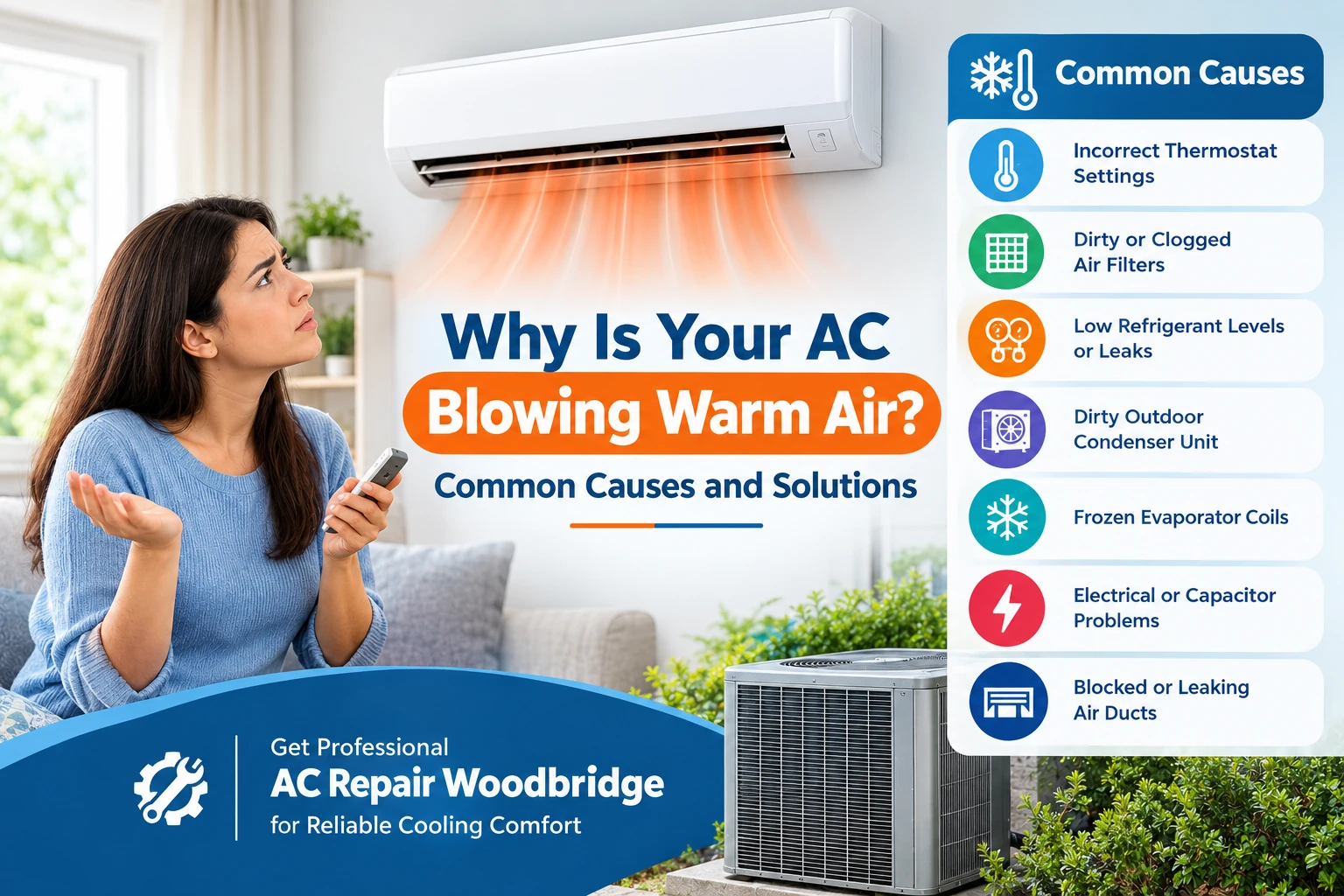
An air conditioner is designed to keep your home comfortable by removing heat from indoor air and circulating cool air throughout your living space. However, when your AC starts blowing warm air instead of cool air, it can quickly become frustrating, especially during the hot summer months in Woodbridge, Virginia. This problem may occur because of simple issues such as incorrect thermostat settings or dirty air filters. In other cases, it may indicate refrigerant leaks, frozen evaporator coils, or electrical problems.
Understanding why your air conditioner is blowing warm air can help you identify possible causes and decide what steps to take. While some issues can be resolved through basic troubleshooting, others require professional attention. Knowing when to schedule AC repair Woodbridge services can help restore cooling performance and prevent additional system damage.
1. Incorrect Thermostat Settings
Incorrect thermostat settings are among the simplest reasons an air conditioner may blow warm air. Sometimes, the thermostat is accidentally switched to Fan or Heat mode instead of Cool mode.
When the fan operates without activating the cooling system, it may circulate indoor air without reducing its temperature.
What you should check:
- Make sure the thermostat is set to Cool mode.
- Set the temperature below the current indoor temperature.
- Check whether the fan is set to Auto.
- Replace thermostat batteries if the display is weak.
- Make sure the thermostat is not exposed to direct sunlight.
If the thermostat settings are correct but the system continues blowing warm air, the issue may require professional inspection.
2. Dirty or Clogged Air Filters
Air filters collect dust, dirt, pet hair, and other airborne particles. Over time, these materials can block airflow and prevent the air conditioner from circulating cool air effectively.
Restricted airflow can also cause the evaporator coil to become too cold and freeze, reducing the system’s cooling performance.
Common signs of a dirty air filter include:
- Weak airflow from supply vents.
- Warm or insufficiently cooled air.
- Increased dust around your home.
- Longer cooling cycles.
- Uneven indoor temperatures.
Possible solution:
Inspect your air filter regularly and clean or replace it according to the manufacturer’s instructions. Many standard filters need replacement every one to three months, depending on household conditions and usage.
3. Low Refrigerant Levels or Refrigerant Leaks
Refrigerant plays an essential role in the cooling process. It absorbs heat from indoor air and transfers it outside through the air conditioning system.
If refrigerant levels become low because of a leak, the system may struggle to remove heat from your home. As a result, the AC may blow warm or insufficiently cooled air.
Warning signs of refrigerant problems include:
- Warm air coming from the vents.
- Ice forming on refrigerant lines.
- Longer cooling cycles.
- Hissing or bubbling sounds near refrigerant components.
- Reduced cooling performance.
Possible solution:
Contact a qualified HVAC technician to inspect the system, locate any leaks, and complete the necessary repairs. Refrigerant should not simply be added without identifying the underlying problem. Handling refrigerant requires appropriate training and certification.
4. Dirty Outdoor Condenser Unit
The outdoor condenser unit releases heat collected from inside your home. When dirt, leaves, grass, or other debris accumulate around the unit, airflow can become restricted.
This prevents the system from releasing heat efficiently and may cause the air conditioner to blow warm air.
Here are some basic maintenance tips:
- Remove loose leaves and debris around the outdoor unit.
- Keep plants and shrubs away from the condenser.
- Maintain sufficient clearance for airflow.
- Avoid placing furniture or storage items near the unit.
- Arrange professional cleaning when necessary.
Before performing basic exterior cleaning, turn off the system. Never open electrical panels or attempt to clean internal components without proper training.
5. Frozen Evaporator Coils
Evaporator coils absorb heat from indoor air during the cooling process. When airflow is restricted or refrigerant-related problems occur, these coils may become too cold and develop ice buildup.
Frozen coils prevent the air conditioner from absorbing heat properly, which can result in warm air coming from the vents.
Common symptoms include:
- Weak or no airflow.
- Visible ice on refrigerant lines.
- Water around the indoor unit after ice melts.
- Poor cooling despite continuous operation.
Possible solution:
Turn off the cooling mode and allow the ice to melt naturally. Do not scrape the ice or use sharp objects. If freezing happens repeatedly, contact an HVAC professional to identify the actual cause.
6. Electrical or Capacitor Problems
An air conditioner relies on electrical components to operate its compressor, fans, and other important parts. A faulty capacitor, contactor, or electrical connection may prevent the outdoor unit or compressor from functioning correctly.
When the compressor does not operate properly, the system may circulate air without cooling it effectively.
Possible warning signs include:
- Clicking or buzzing sounds.
- The outdoor unit failing to start.
- Frequent system shutdowns.
- The fan operating without proper cooling.
- Repeated circuit breaker trips.
Electrical issues should always be inspected by a qualified technician. Avoid opening electrical panels or attempting repairs yourself because these components can present serious safety risks.
7. Blocked or Leaking Air Ducts
Air ducts distribute cooled air throughout different rooms in your home. If ducts become blocked, disconnected, or damaged, conditioned air may not reach the intended areas.
Leaking ductwork can also allow cool air to escape into attics, crawl spaces, or wall cavities.
Signs of ductwork problems include:
- Certain rooms remain warmer than others.
- Weak airflow from multiple vents.
- Unusual dust accumulation.
- Uneven indoor temperatures.
- Higher energy bills.
Keep supply and return vents unobstructed. If airflow problems continue, a professional technician can inspect the ductwork and recommend suitable repairs.
When Should You Contact a Professional for AC Repair in Woodbridge?
Basic troubleshooting can resolve minor issues, but persistent cooling problems may indicate a more serious system fault. Professional assistance is recommended when:
- Your AC continues blowing warm air after checking thermostat settings.
- Ice repeatedly forms on refrigerant lines or indoor components.
- The outdoor unit does not start properly.
- You notice burning smells or unusual electrical sounds.
- The circuit breaker trips repeatedly.
- Your air conditioner runs continuously without cooling your home.
A qualified HVAC technician can inspect the system, identify the underlying problem, and recommend appropriate repair solutions.
Conclusion
An air conditioner blowing warm air can result from several problems, including incorrect thermostat settings, clogged filters, refrigerant leaks, dirty condenser units, frozen evaporator coils, electrical faults, and damaged ductwork. Checking basic settings and maintaining clean filters can help homeowners resolve some minor issues.
However, refrigerant problems, electrical faults, and mechanical failures require professional attention. If your cooling system continues to blow warm air, scheduling professional AC repair Woodbridge services can help identify the cause and restore reliable cooling. Regular maintenance and timely repairs can also improve system efficiency, reduce unnecessary energy consumption, and maintain indoor comfort throughout the summer.